Our story
Founded in 1891 by Aso Ticmerf. Still in the family.*
*So is the money.
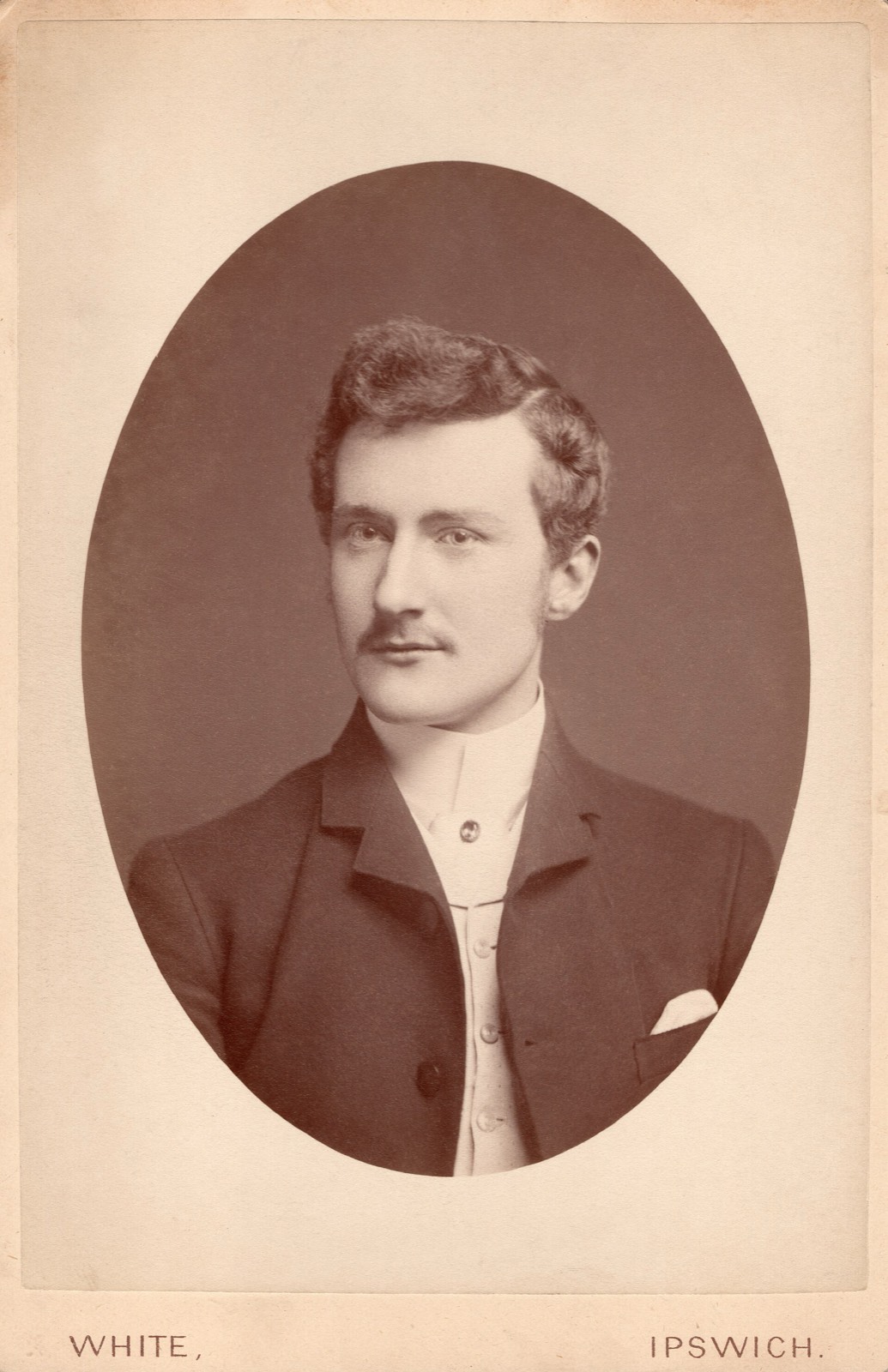

Seen here: our founder, Aso Ticmerf, smiling as he welcomes our very first member.*
*Smile not shown. Ask, and a representative may describe it to you.
“Every family deserves the finest groceries.”†
Aso Ticmerf
†Mr. Ticmerf was speaking of his own family.
-
1891
Our humble beginnings
Like every great company, ours began with very little: one founder, one idea and the family’s savings.*
*The savings included a racing yacht, a house among the palms and a ballroom. The family also owned the bank.
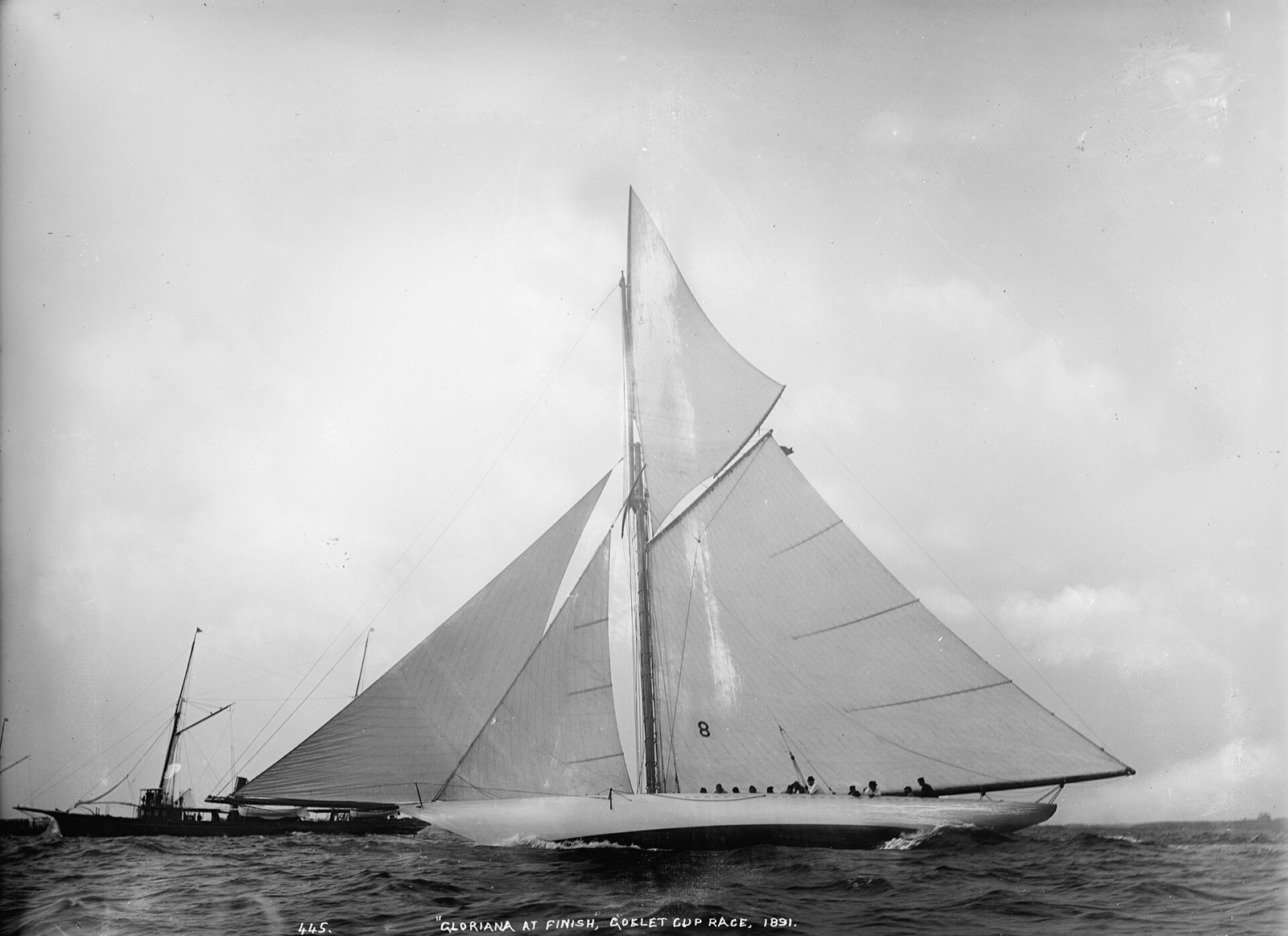
Photo: John S. Johnston, Library of Congress, public domain, via Wikimedia Commons Seen here: the family’s first company vehicle, 1891.†
†Members walked.
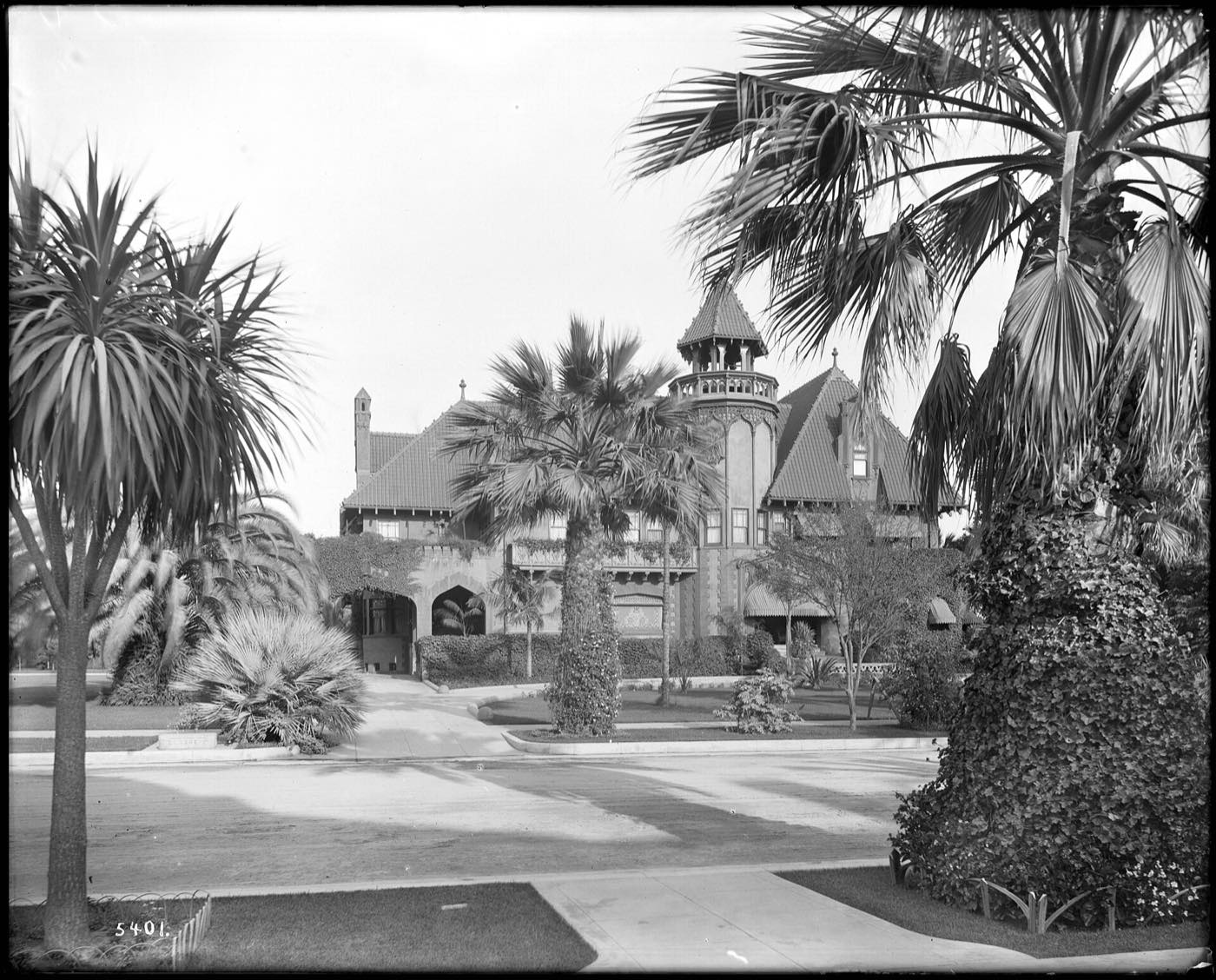
Photo: C.C. Pierce & Co., public domain, via Wikimedia Commons Shown: our first headquarters, a modest home among the palms.‡
‡Members were welcome to admire it from the street.
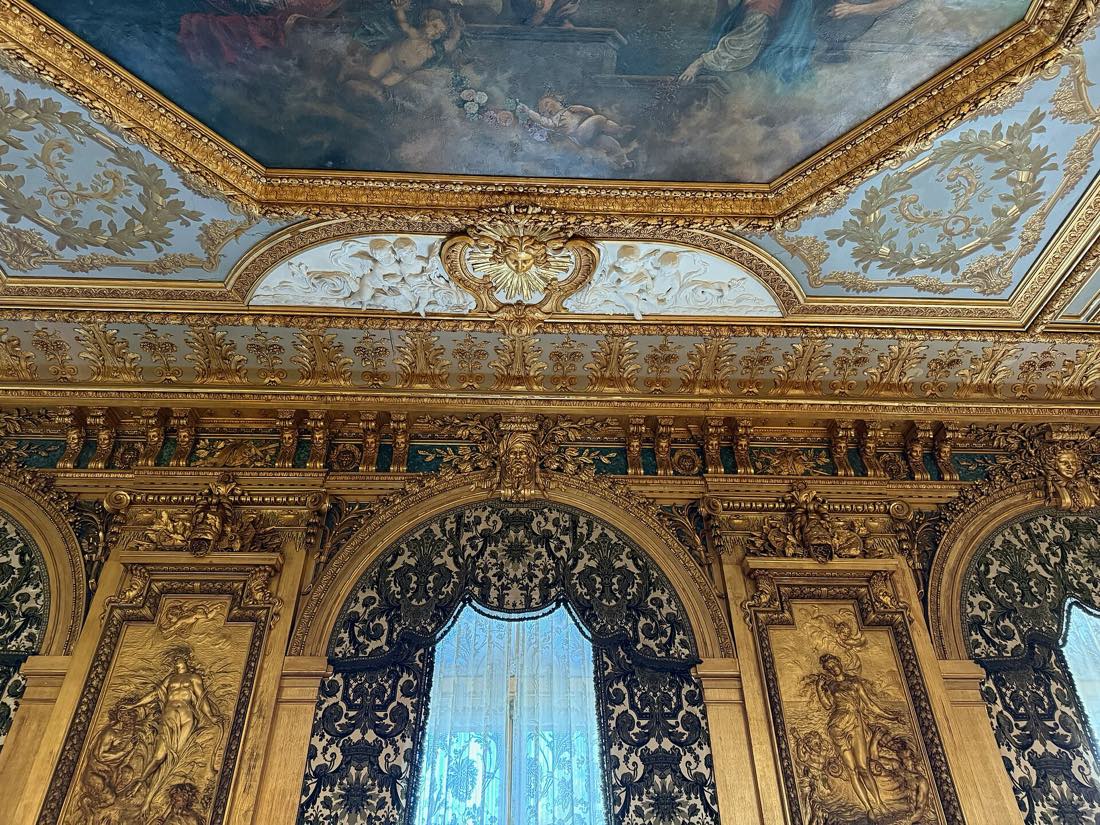
Photo: Reddeleon, CC0, via Wikimedia Commons Seen here: the room where our very first prices were set, with care.§
§The prices were not shown, and neither was the room.
-
1893
Difficult times
In 1893 a panic on the markets began a long depression, the worst the country had then known. Times were difficult for families everywhere.
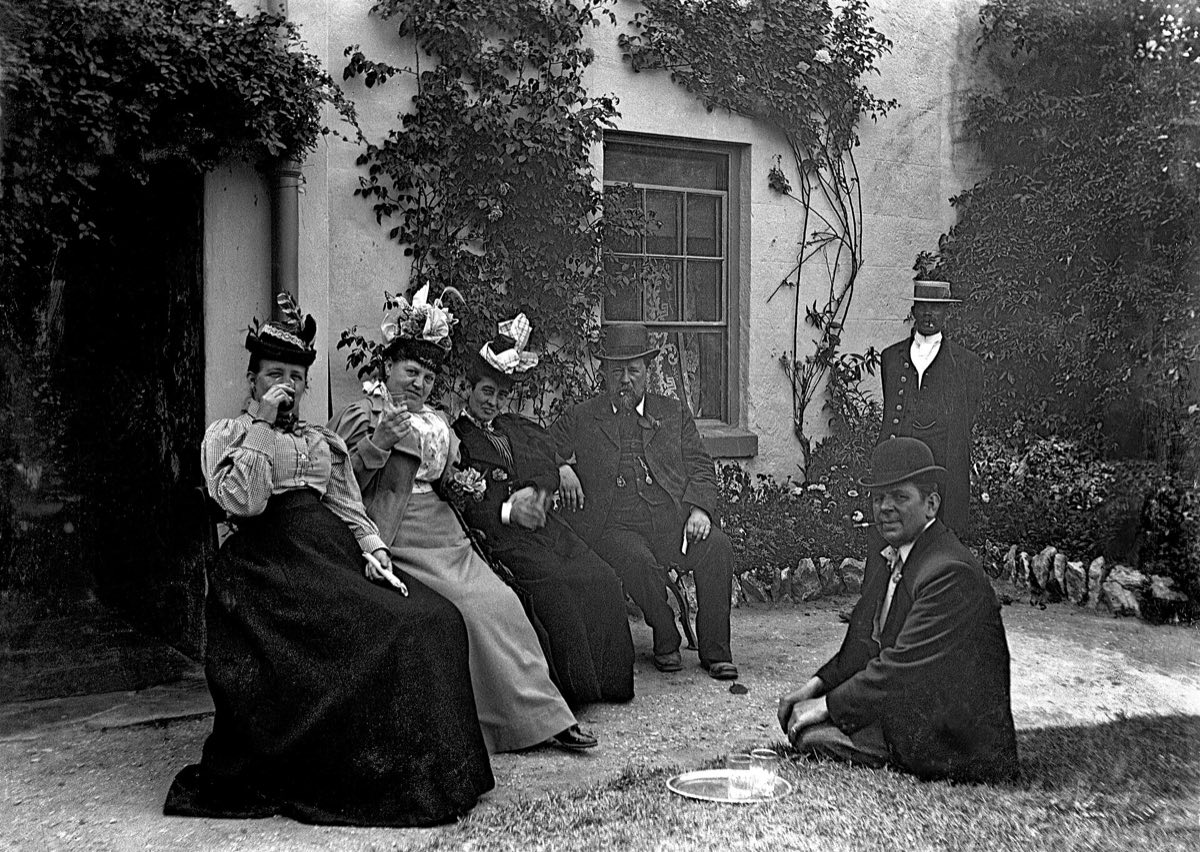
Photo: an amateur photographer, public domain, via Wikimedia Commons Shown: the family, embracing difficult times during the depression.*
*The times were not difficult for the family at all. The tea was very good that year.
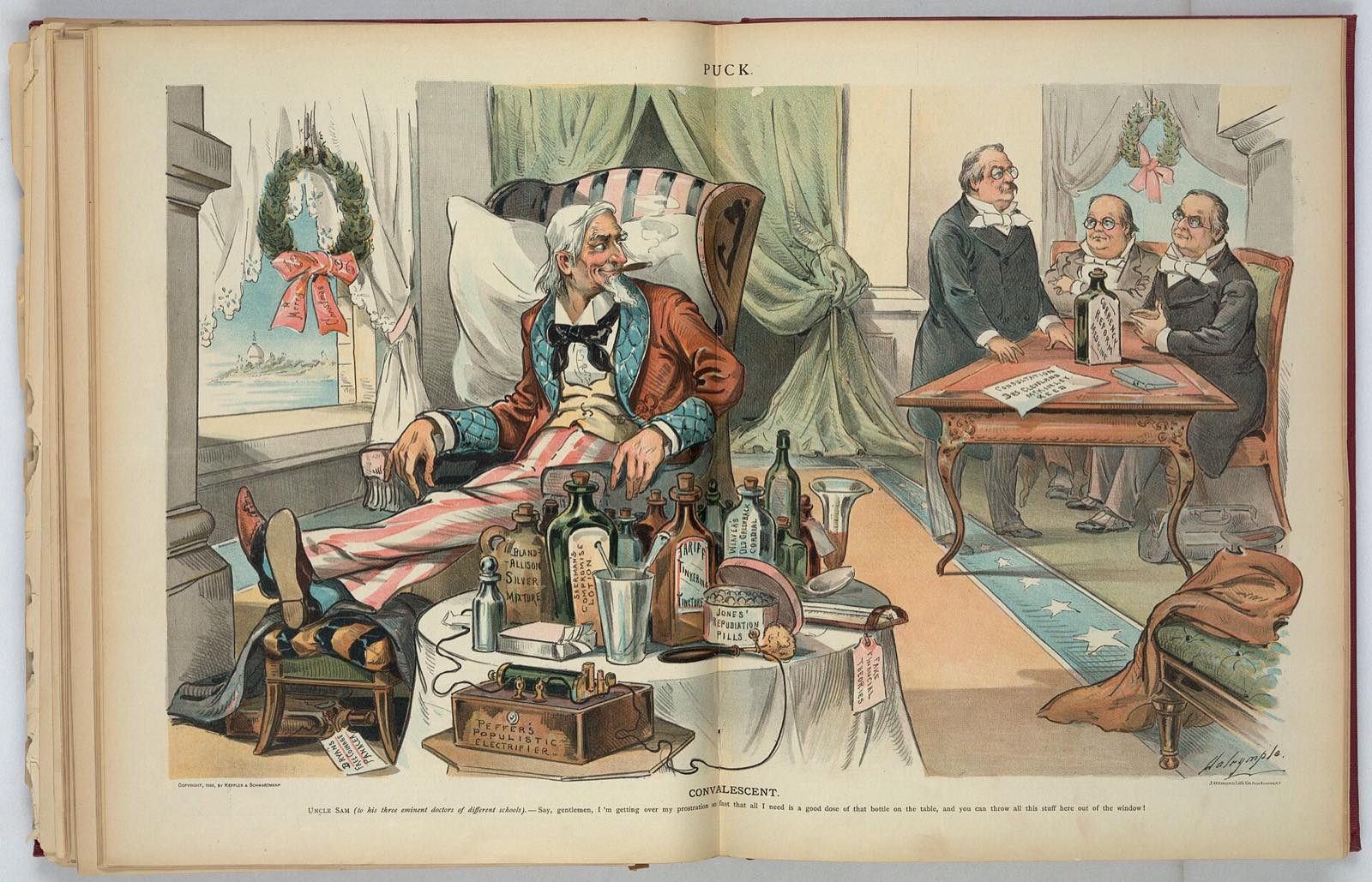
Cartoon: Louis Dalrymple, Puck, December 23, 1896, the Library of Congress, public domain, via Wikimedia Commons Displayed: the country convalescing in 1896, attended by three doctors of different schools.†
†None of them would say what the cure would cost. The family took notes.
-
1905
The cure
In 1905 Collier’s went after the medicine trade: bottles sold as cures, and no federal law to make the label say what was inside.*
*The family was not in the bottle business. It read every word.
The next summer Congress passed the Pure Food and Drug Act. From January 1, 1907, a medicine’s label could not be false or misleading in any particular, and it had to state how much alcohol, morphine, opium, cocaine or heroin was inside, among others (Pure Food and Drug Act of June 30, 1906, ch. 3915, §§ 8 and 13, 34 Stat. 768).†
†The label had to say what was in the bottle. Nothing in the Act asked it to say the price. The family read that part twice.
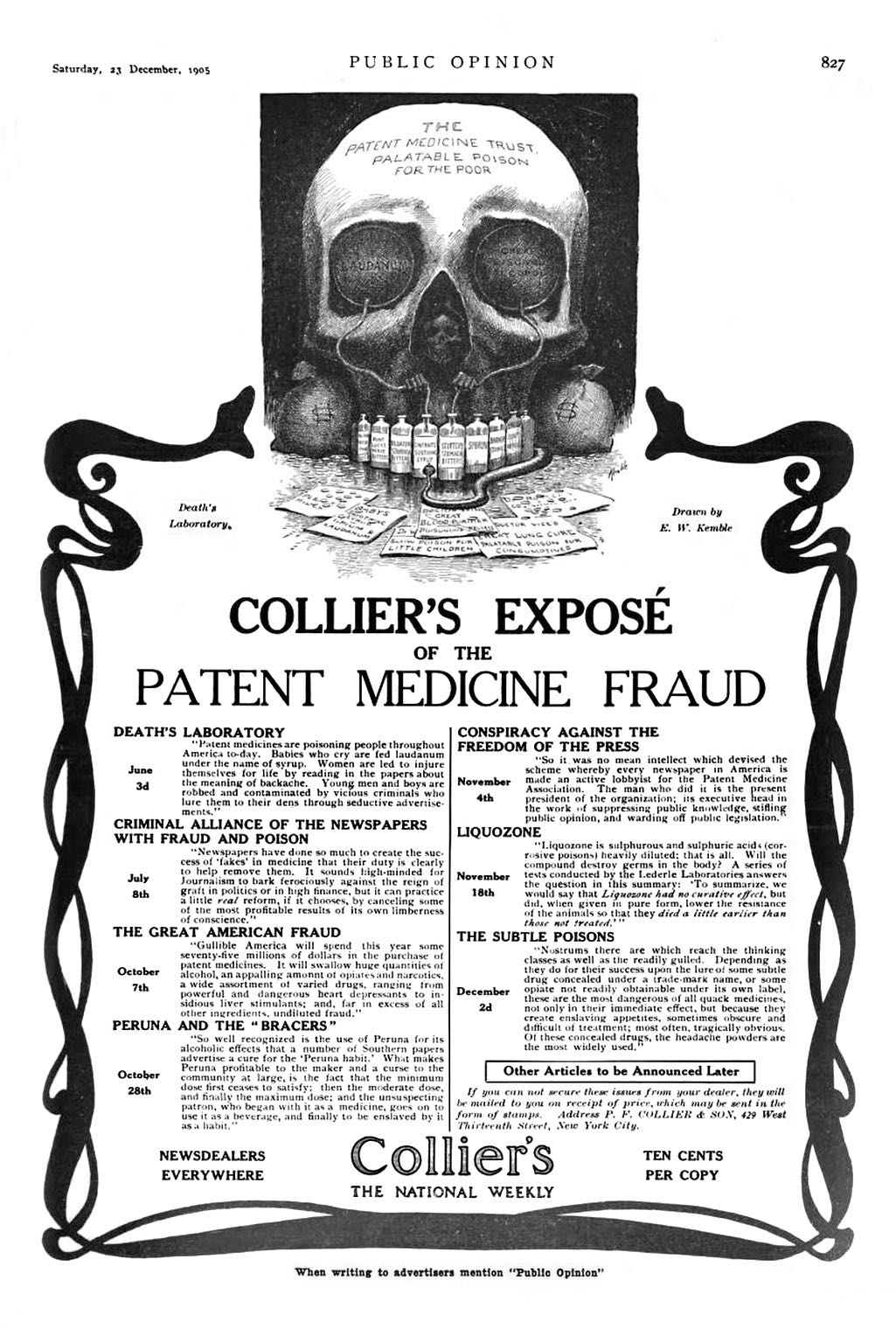
Illustration: E. W. Kemble, for Collier’s, in Public Opinion, December 23, 1905, public domain, via Wikimedia Commons Seen here: a magazine advertisement from December 1905, reviewing the medicine trade.‡
‡The family learned its lesson. Put nothing on the label you could be held to.
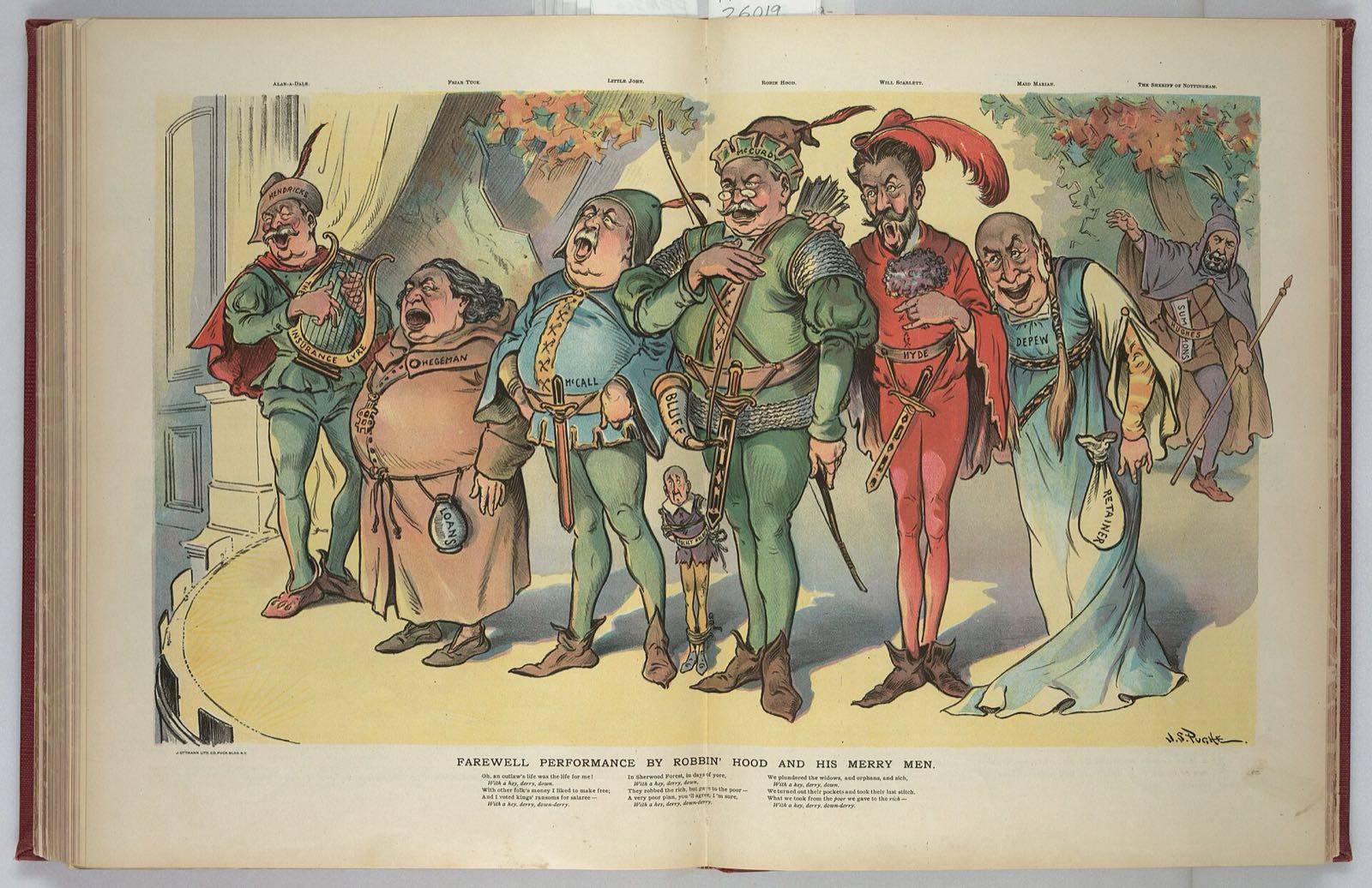
Cartoon: J. S. Pughe, Puck, December 20, 1905, the Library of Congress, public domain, via Wikimedia Commons Shown: our friends in life insurance, taking a farewell bow, December 1905.§
§In this business, a farewell performance can run for years.
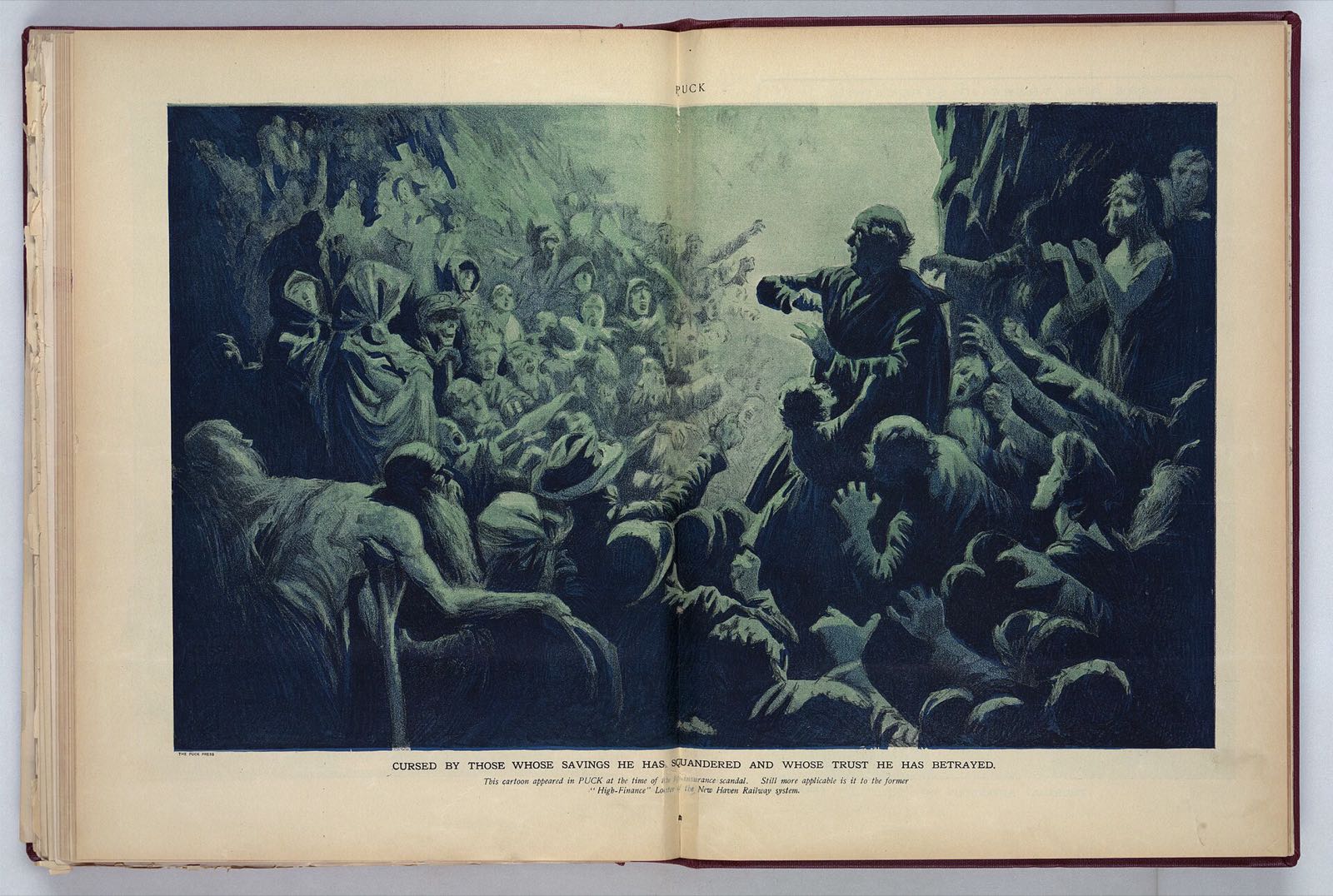
Cartoon: an unnamed artist, Puck, December 31, 1913, the Library of Congress, public domain, via Wikimedia Commons Displayed: a meeting of policyholders, as the magazines liked to draw one.‖
‖The family’s meetings are held indoors, by invitation.
-
1907
Friends of friends
As the company grew, the family welcomed its first investors: friends, and friends of friends.*
*Investing is still closed to everyone else.
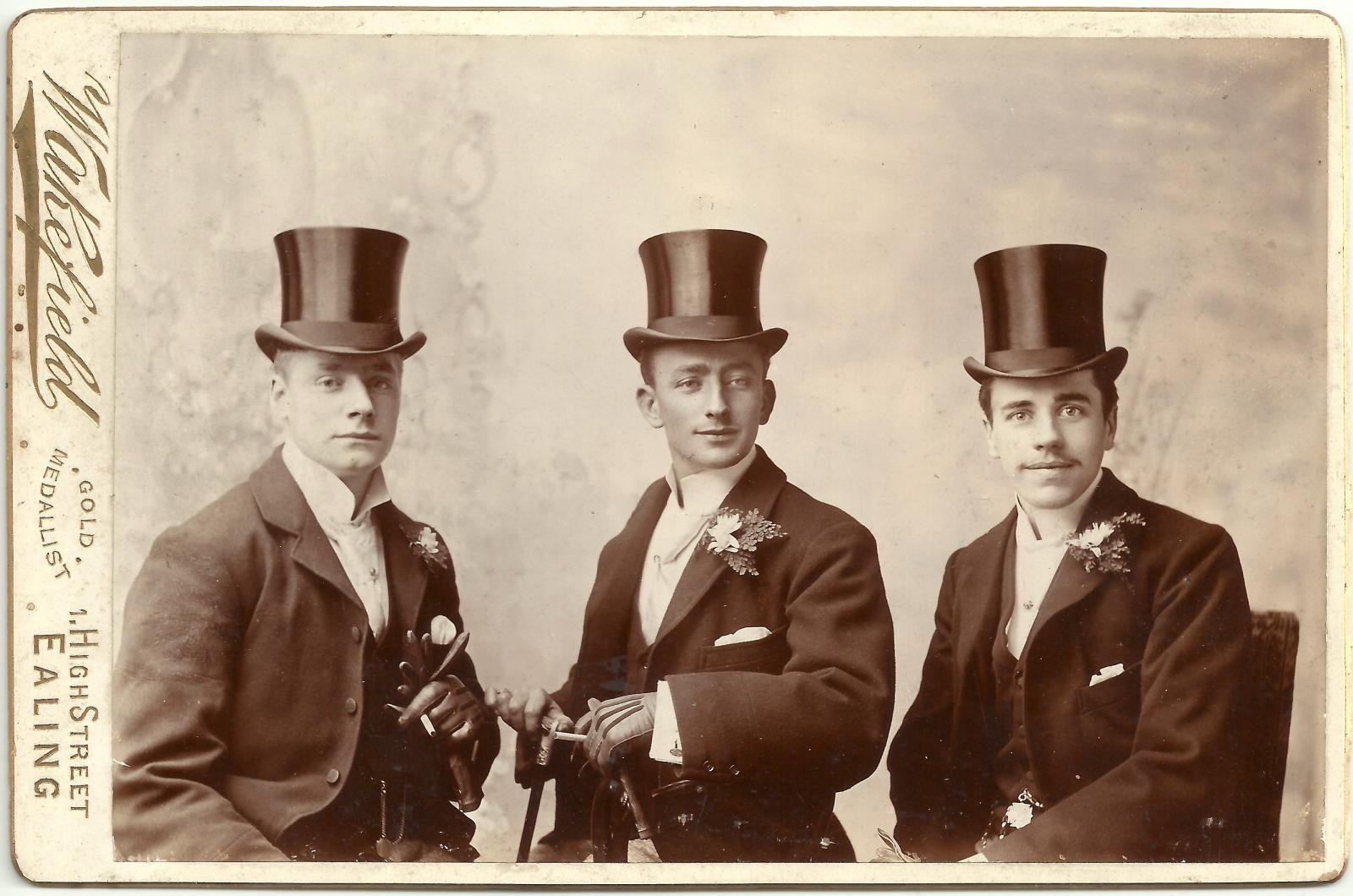
Photo: whatsthatpicture, CC BY 2.0, via Wikimedia Commons Seen here: three of our founding investors, on the day they joined.†
†Each was a friend of a friend of the family. The hats were covered in full.
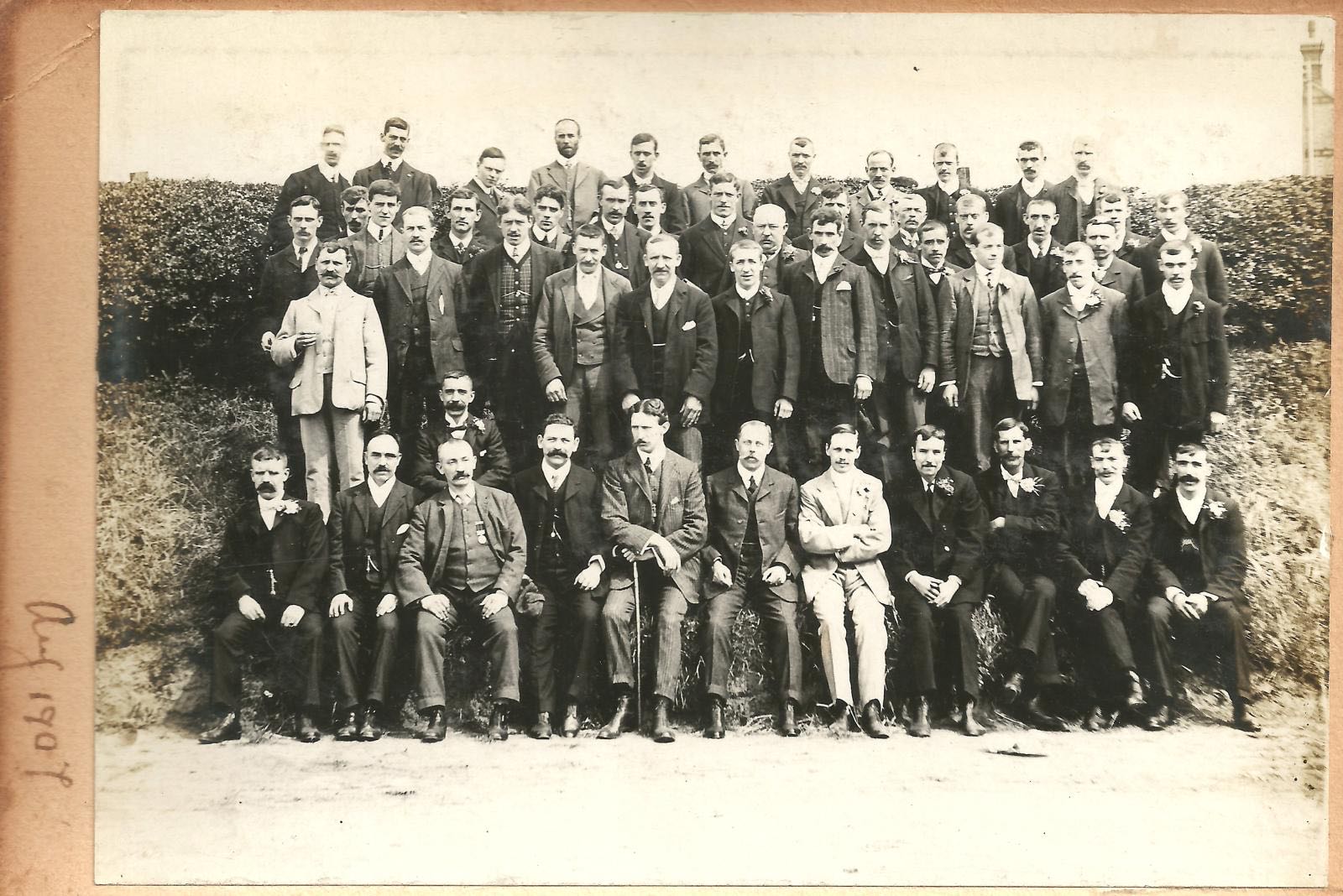
Photo: whatsthatpicture, CC BY 2.0, via Wikimedia Commons Seen here: the annual meeting of investors, August 1907, where every voice was heard.‡
‡Members of the plan were not invited. Most of the moustaches were.
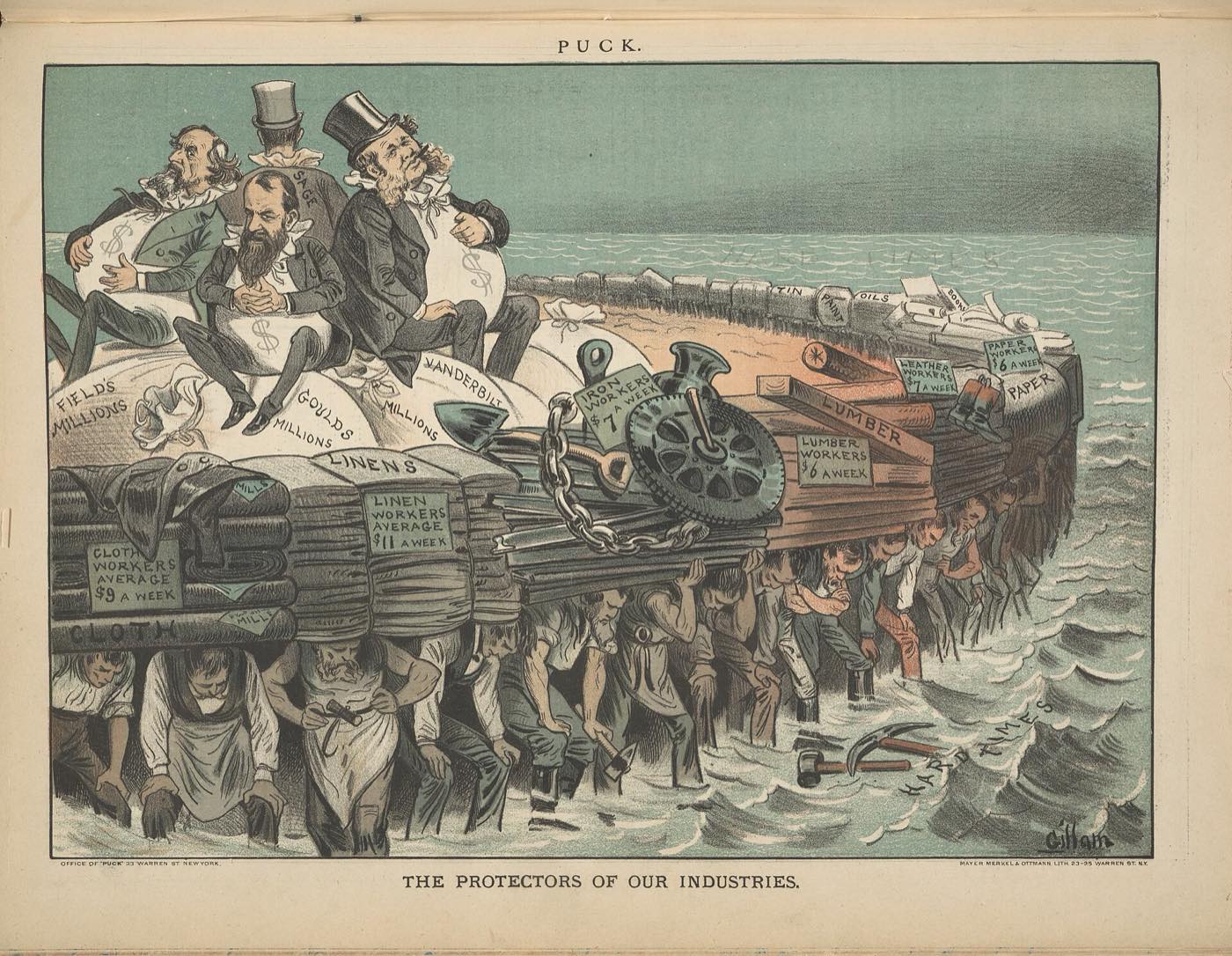
Cartoon: Bernhard Gillam, Puck, February 7, 1883, the Library of Congress, public domain, via Wikimedia Commons Seen here: friends of friends of the family, in a portrait from 1883.§
§The members carried the raft. The investors carried the bags.
-
1911
Family values
The family’s closest family taught us something.*
*Our name runs in the family.
In 1890 Congress made it a crime to restrain trade or to monopolize it (the Sherman Antitrust Act, 15 U.S.C. §§ 1–7). On May 15, 1911, the Supreme Court ordered Standard Oil broken up, and the stock of its companies went back to the same stockholders (Standard Oil Co. of New Jersey v. United States, 221 U.S. 1).†
†The family learned its lesson: never be one company. Be a family of companies.
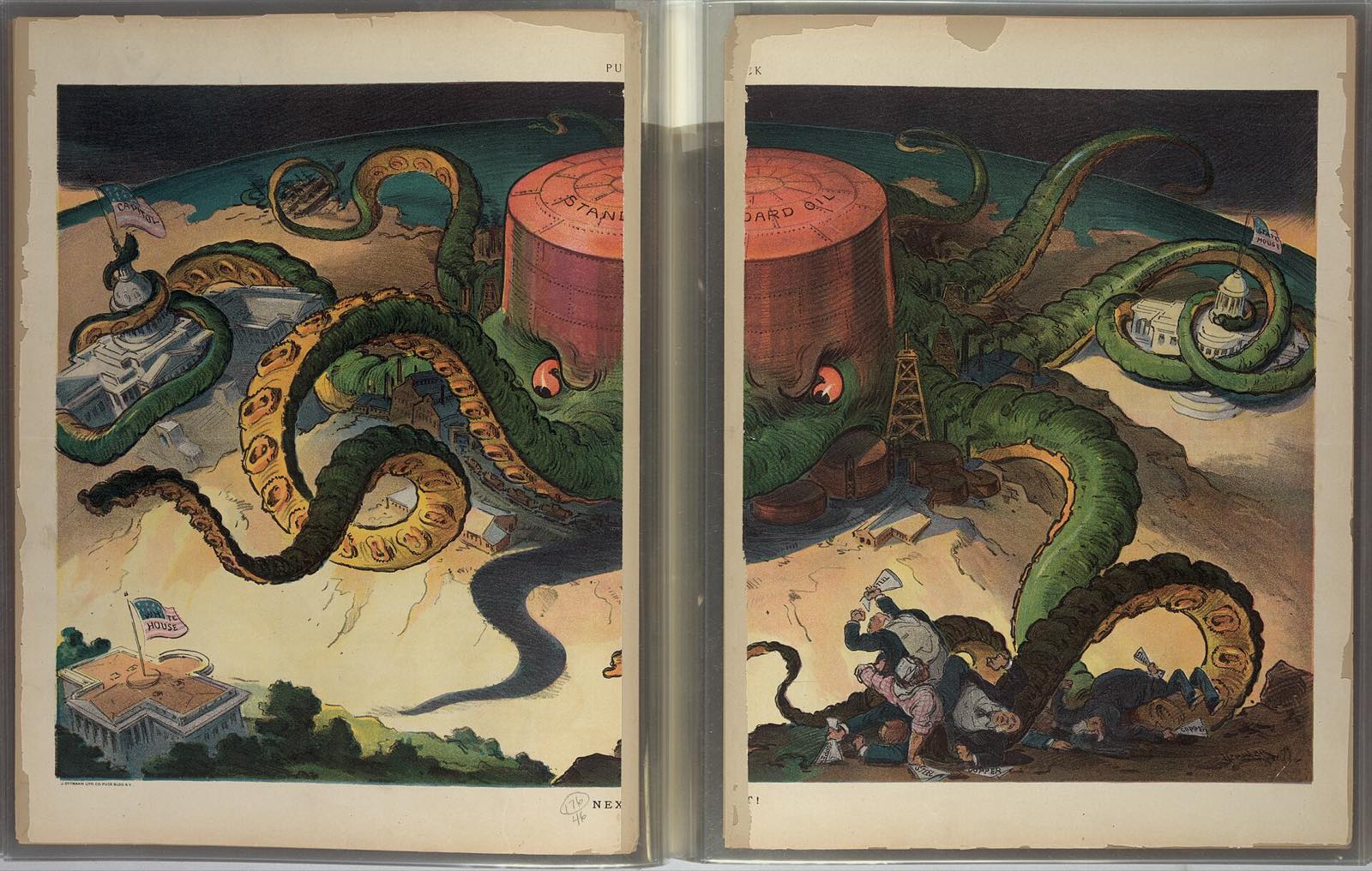
Cartoon: Udo J. Keppler, Puck, 1904, the Library of Congress, public domain, via Wikimedia Commons Seen here: our closest family, in a portrait from 1904.‡
‡Its arms were around the Capitol and a state house, and one was reaching for the White House. The family admired the reach.
-
The Twenties
The good times
In the Twenties business roared, and the family shared the good times.*
*With each other.
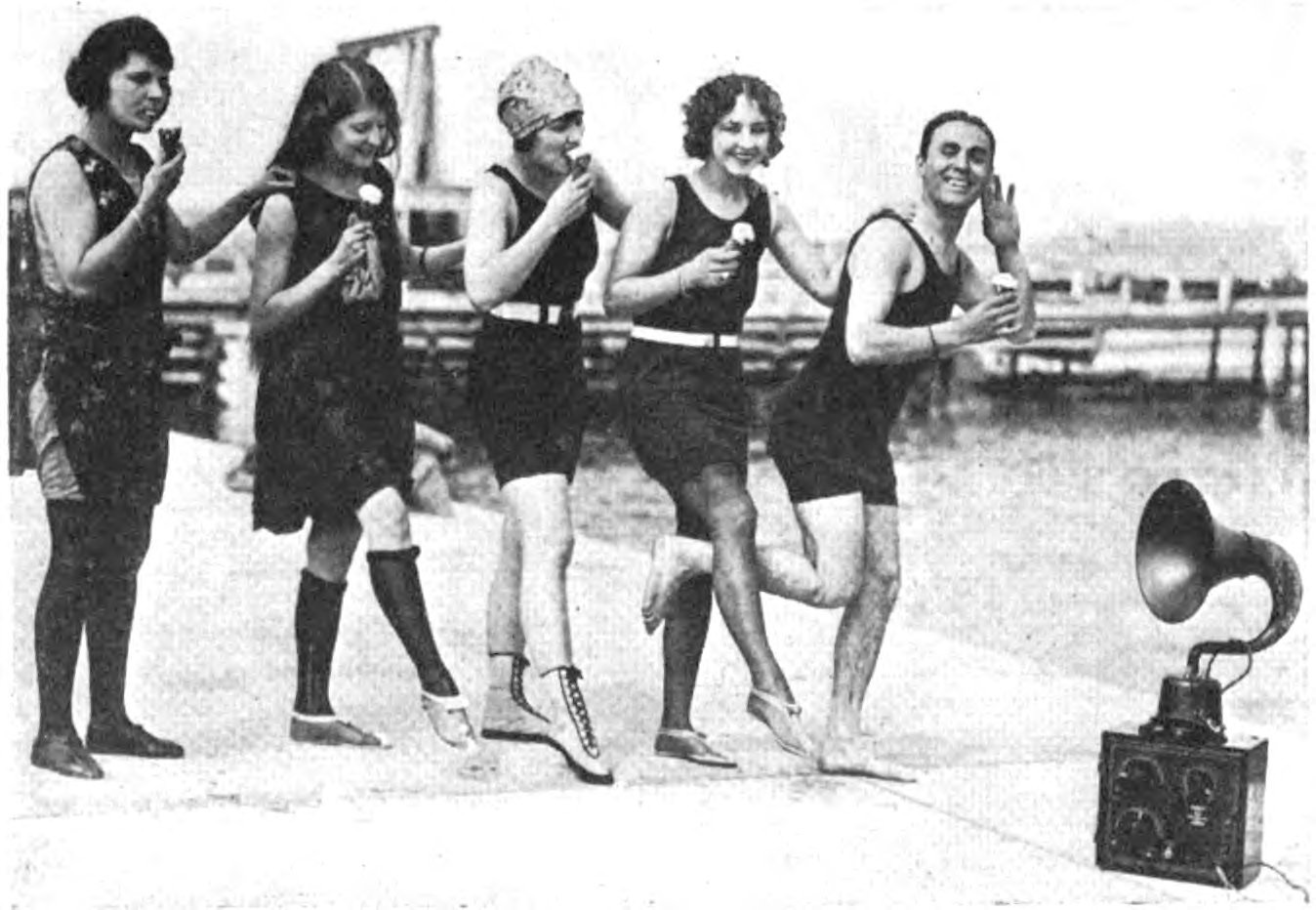
Photo: The Wireless Age, 1923, public domain, via Wikimedia Commons Seen here: the family’s beach party, 1923, with the very latest in radio.†
†Paid for by the decade’s premiums, which also roared.
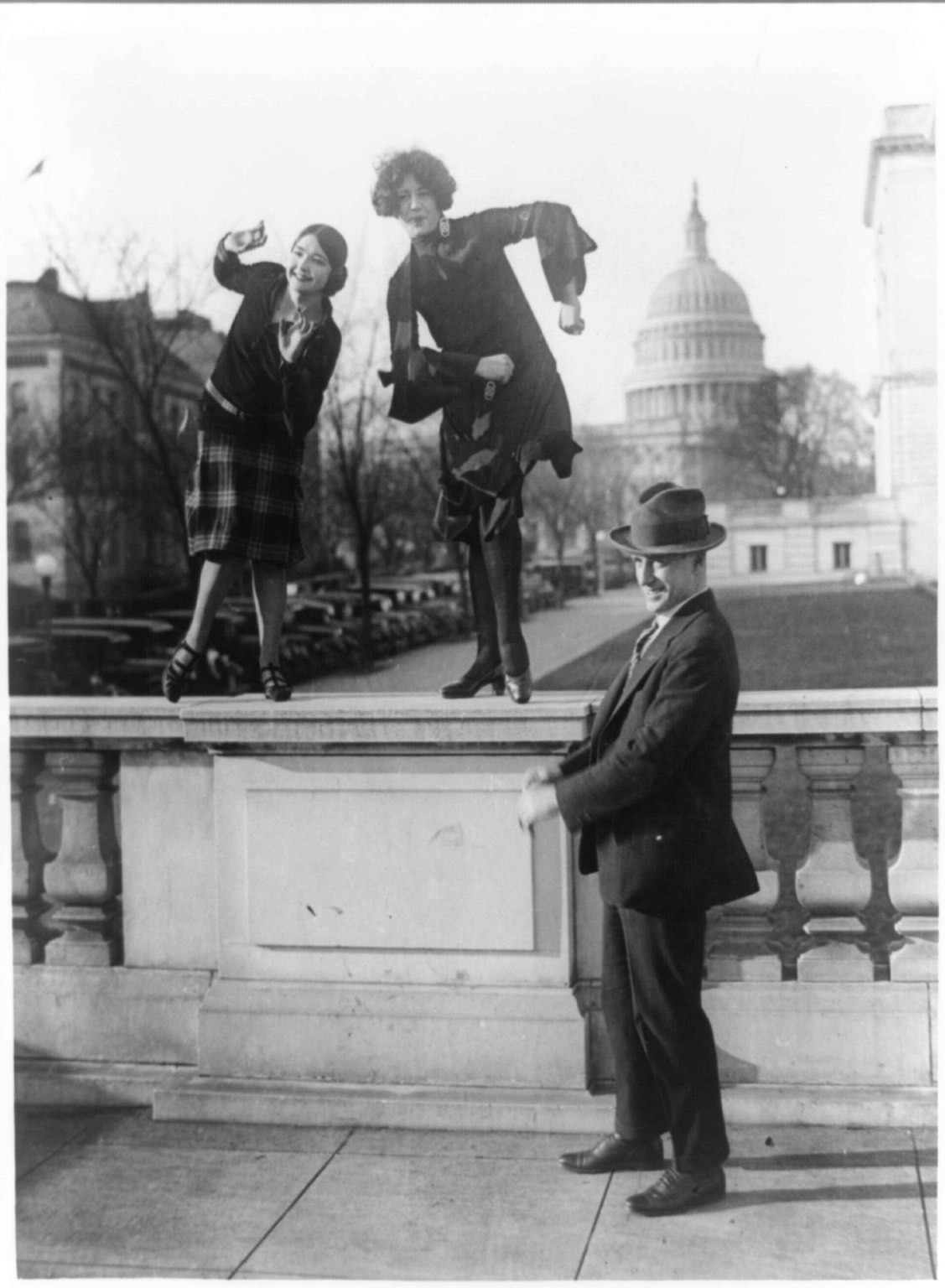
Photo: National Photo Company, Library of Congress, public domain, via Wikimedia Commons Seen here: the family, dancing the Charleston at the Capitol.‡
‡The family has always felt at home in Washington, where it keeps many friends.
-
1929
Tumbling down
Then, in October 1929, it all came tumbling down.*
*The family pocketed the rest.
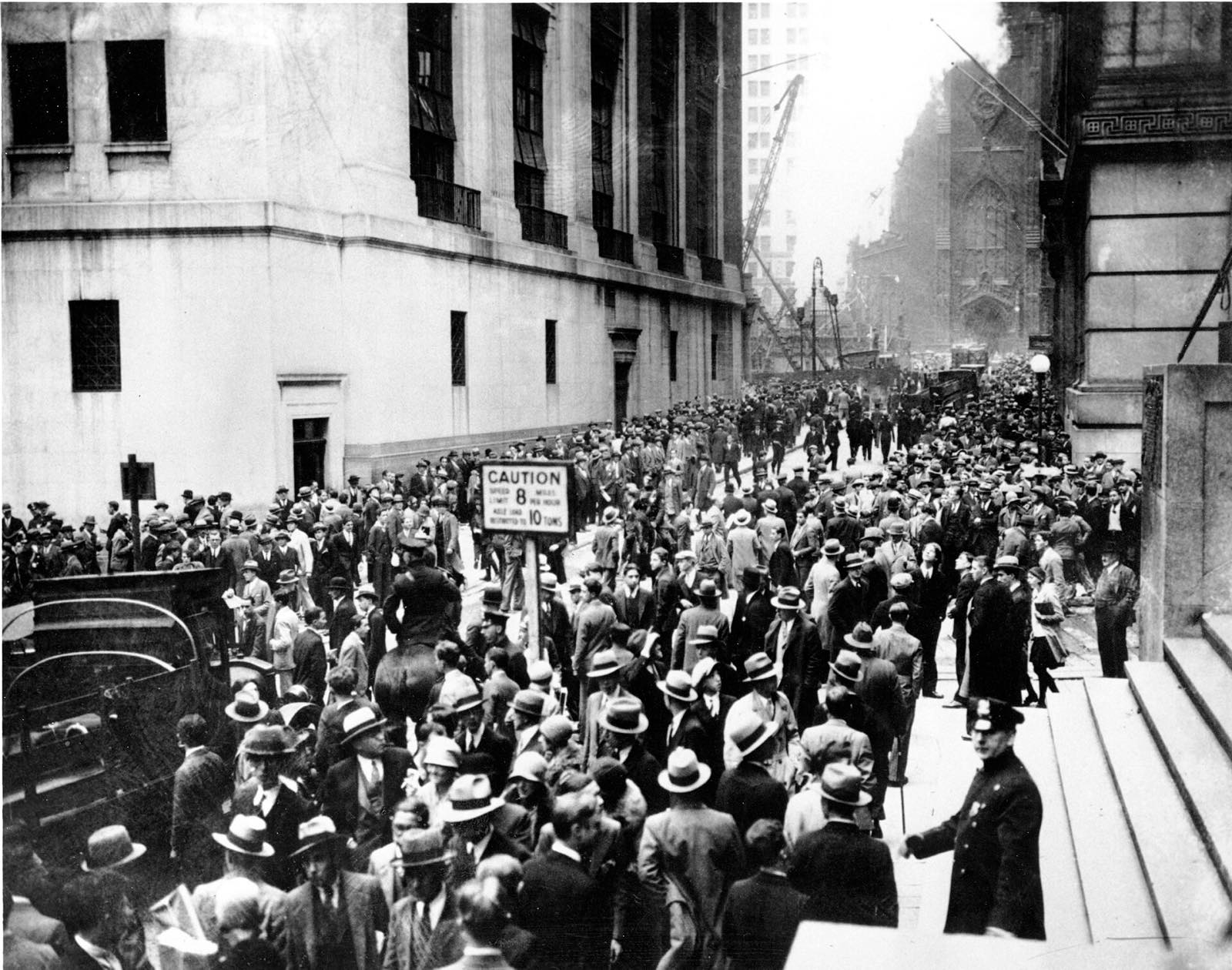
Photo: Associated Press, public domain, via Wikimedia Commons Shown: Wall Street, October 1929, where a great crowd gathered.†
†The family was not in the crowd. It was at home, counting.

Photo: Spaarnestad Photo, public domain, via Wikimedia Commons Seen here: the morning after, our staff tidying up.‡
‡None of the paper was the family’s. Our staff has pushed paper ever since.
-
1942
The war effort
In 1942 the country froze wages to hold down wartime prices, so employers competed for workers with health benefits instead (the Stabilization Act of 1942, Pub. L. 77-729, 56 Stat. 765). The family answered the call.*
*None of the family were sent overseas. They were needed at home, to sell your employer its first plan.
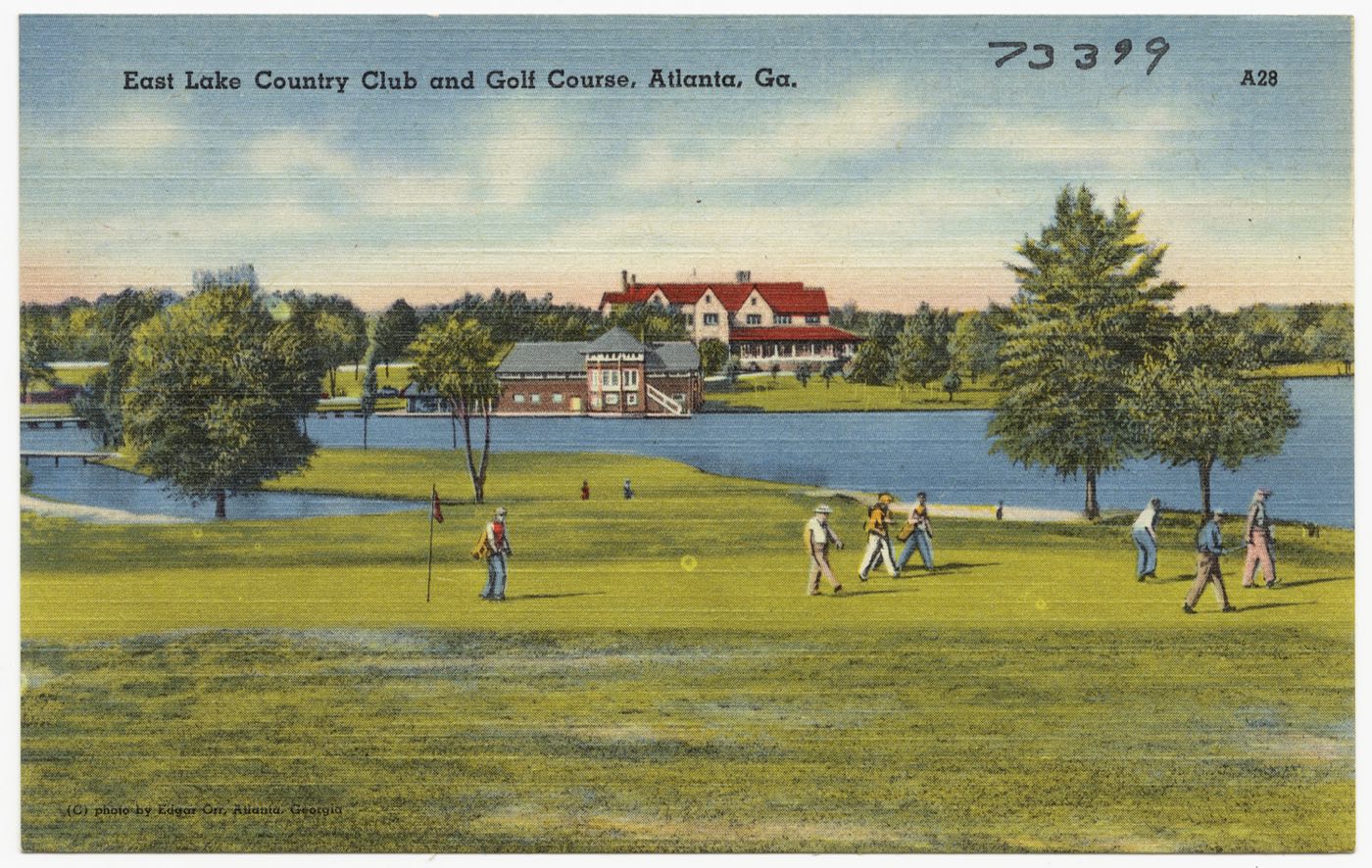
Photo: the Boston Public Library, public domain, via Wikimedia Commons Seen here: the family, doing its part on the home front.†
†The club stayed open for the duration.
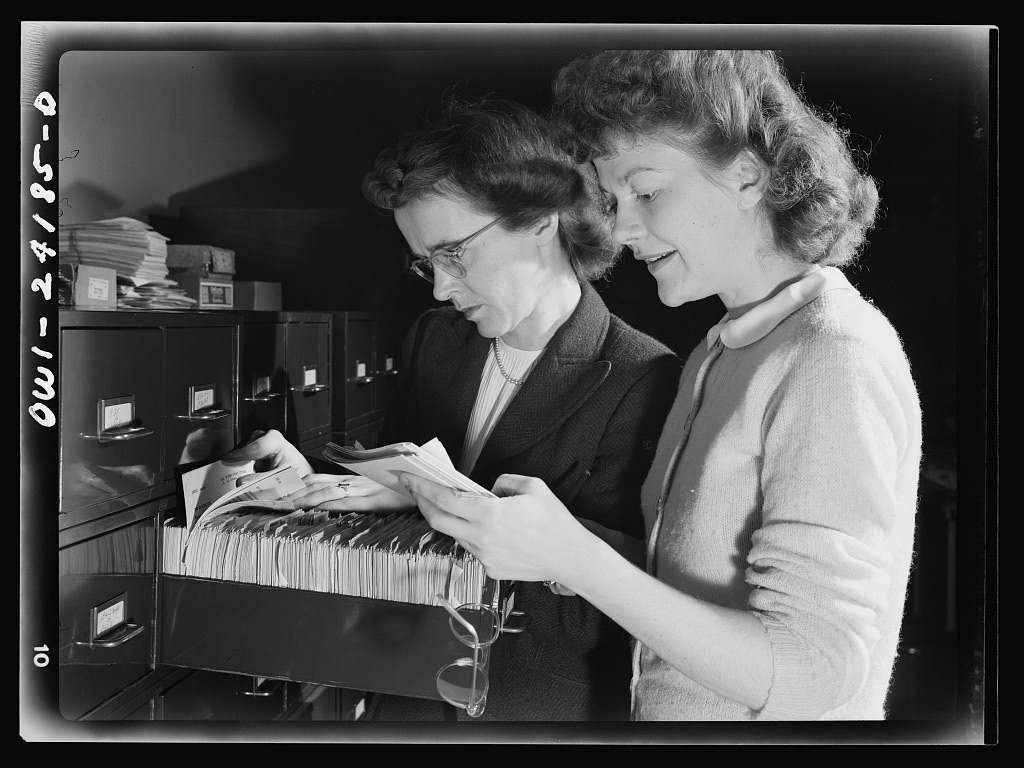
Photo: Ann Rosener, the Library of Congress, public domain, via Wikimedia Commons Shown: our staff, filing the first plans your employers bought.‡
‡The prices were filed where no member would ever look. They still are.
-
1954
Above suspicion
In 1954 the tax code made your plan tax-free: what your employer pays for it is not counted as your income (26 U.S.C. § 106).*
*It also tied your plan to your job. Change jobs, change doctors.
In those years the country hunted for communists. The family was never suspected.†
†The family has never shared anything.
On December 2, 1954, the Senate censured Senator Joseph McCarthy, who had led the hunt, by a vote of 67 to 22.‡
‡The family had given generously to both sides.
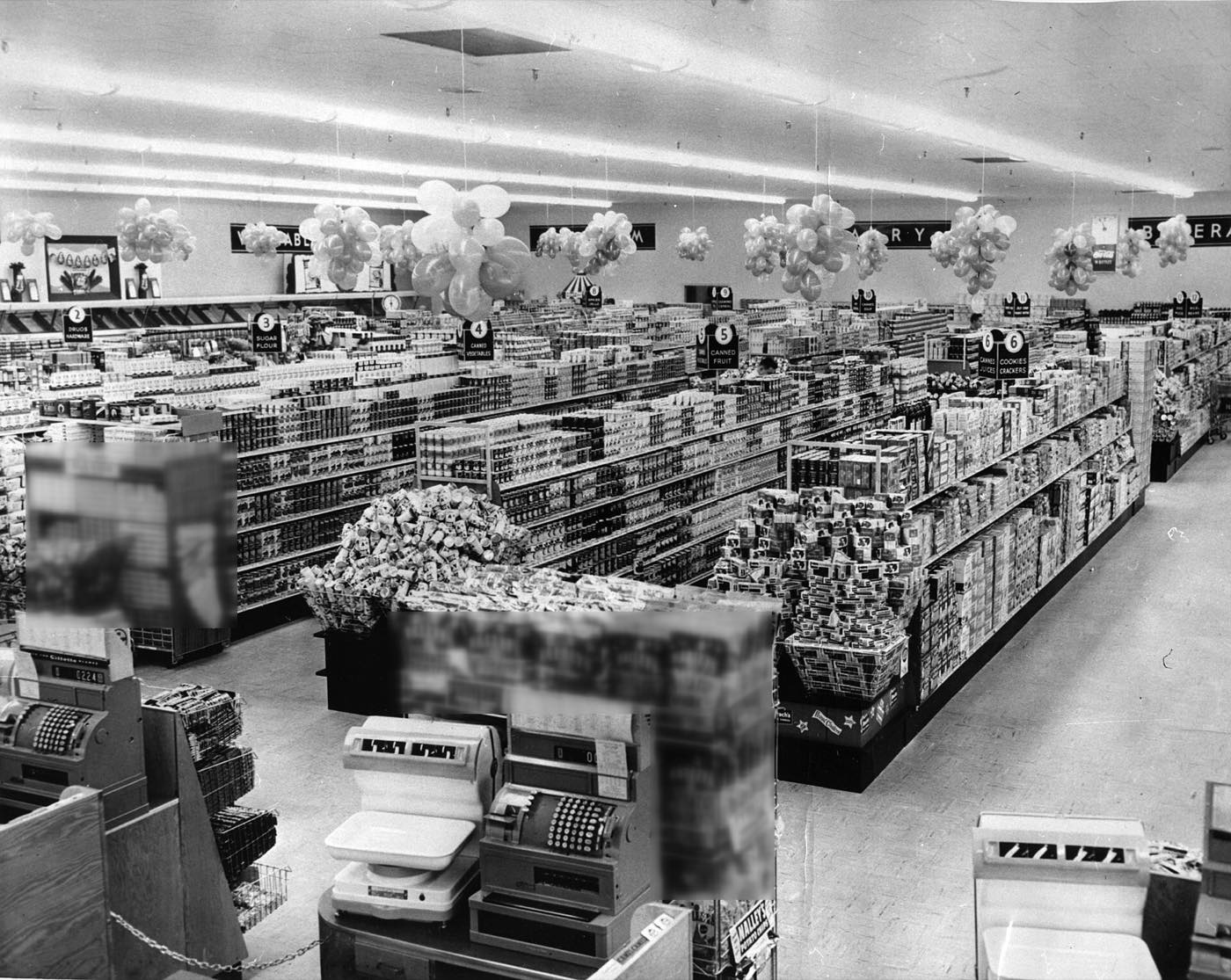
Photo: Seattle Municipal Archives, brand signs blurred, CC BY 2.0, via Wikimedia Commons Seen here: one of our stores in 1955, a price on every item.§
§We have since improved the experience.
-
The Sixties
Flower power
We have always enjoyed a revolution. When the young people sang of peace, our cousins bought the decade’s songs.*
*The boys who wrote them did not. You bought the records.
In 1964 the country passed the Civil Rights Act (Pub. L. 88-352, 78 Stat. 241), and the family welcomed it.†
†None of the family’s rights were affected. The family already had all of them.
In 1965 the food bank and the government’s store became law (the Social Security Amendments of 1965, Pub. L. 89-97, 79 Stat. 286), and we were glad to help.‡
‡We have pushed its paper ever since.

Photo: RalfG, public domain, via Wikimedia Commons Seen here: the family’s party for the new law, 1965.§
§The food bank’s members were not invited. They were allowed frozen food.
-
1965 to 1973
Called to serve
When the country went to war in Vietnam, it sent its sons. The family sent a note.*
*From a doctor. In network.
The family has never run for office.†
†It hires the people who do.
The daughters get married to other families.‡
‡Not your family.
-
1929 to 2022
The family started the fire
Every great company has its milestones. Here are ours.*
*Some of them are laws passed to stop us. We helped write the others.
- 1929
Schoolteachers in Dallas begin paying 50 cents a month for up to 21 days in the hospital, the plan the industry traces itself to.
The family takes notes.
- 1942
The country freezes wages, and employers compete for workers with health benefits instead.
The family finds its best customer: your employer.
- 1954
The tax code leaves what your employer pays for your plan out of your taxable income (26 U.S.C. § 106).
The family is paid before taxes, too.
- 1965
Medicare and Medicaid become law.
The family opens a store at the door.
- 1971
On February 17, on the Oval Office tape, a friend of the family briefs the President on a new kind of prepaid plan: “All the incentives are toward less medical care” (conversation 450-023, as the Miller Center titles it). The President likes it.
Audio is still being processed. The family is preparing the public’s redactions.
- 1973
On December 29 the HMO Act becomes law (Pub. L. 93-222): federal grants and loans for prepaid plans, and employers of 25 or more who offer health insurance must offer one as an option.
Business is very good. Less care costs less, and the family keeps the difference.
- 1974
ERISA puts job-based plans under federal law, and a plan is not deemed an insurer under state insurance law (29 U.S.C. § 1144).
The family’s plans step out of the states’ reach.
- 1983
Medicare begins paying hospitals a set amount by the diagnosis (the Social Security Amendments of 1983).
The family keeps its own prices, unpublished, for now.
- 1986
COBRA lets you keep your job’s plan for up to 18 months after you leave (29 U.S.C. § 1162).
Keep your plan. Pay all of it, and two percent more.
- 1996
Plans must cover at least 48 hours in the hospital after a birth, and 96 after a cesarean (29 U.S.C. § 1185).
The family had preferred a shorter stay.
- 2003
Medicare begins paying for prescription drugs, and the same law keeps the government out of the price negotiations (42 U.S.C. § 1395w-111(i)).
The family keeps its seat at the table.
- 2009
Congress holds a hearing on insurers that cancelled people’s policies after they fell ill.
The family sent its regrets.
- 2010
The Affordable Care Act caps what you pay out of pocket each year, starting in 2014 (42 U.S.C. § 18022(c)).
The family reads the fine print: what you pay out of network need not count (45 CFR 156.130(c)).
- 2022
The No Surprises Act ends surprise bills for emergency care (42 U.S.C. § 300gg-131; 45 CFR 149.410). From July, plans publish their negotiated prices in files a machine can read (45 CFR 147.212).
The family publishes everything, in files no family will ever open.
- 1929
-
Today
For the people
Other families had railroads and oil, and the country broke them up. Ours is still here.*
*We sell the one thing you cannot shop around for. You cannot wait when you need it. Someone else picked your plan, and someone else pays the bill.
How? Your privacy is our priority.†
†Especially the privacy of our prices. What you need is the last thing you want to talk about, so nobody talks about the price: not you, not your doctor, not us. When the law made us publish our prices in 2022, we published every one of them, and that hid them again.
Every year, at the annual meeting of investors, the family plays Aso’s traditional ballad. Today, for the first time, the family is proud to give its collection to the public, for the people.‡
‡The recording was already the public’s. The public paid for it.
Recording: Auld Lang Syne, the United States Marine Band, public domain, via Wikimedia Commons · MP3, 2 min 19 s
Standard Healthcare is still in the family, and the family is still in the club.§
§The club is closed, except for friends of friends.


Thank you for reading our story. We were there at every turn: the panic, the crash, the war, your first job, the food bank’s door. We have dealt every hand since 1891.*
*We are the house.