Privacy
We protect your privacy. It protects us back.
What we keep private
Your health information. Your procedure. Your price. Our price. Our market. The list is in order of importance, read from the end.
A private procedure deserves a private price. A private price deserves a private market. Put them together and you have what we call privatized healthcare, which is private too.
Your claims
Every claim you send us contains the same personal information we already have on file. We ask for it again, so that it can travel.
Submit by mail, worry-free. The mail carrier is a professional, and the envelope is sealed. A fax is welcome too: it has never leaked anything we know of.
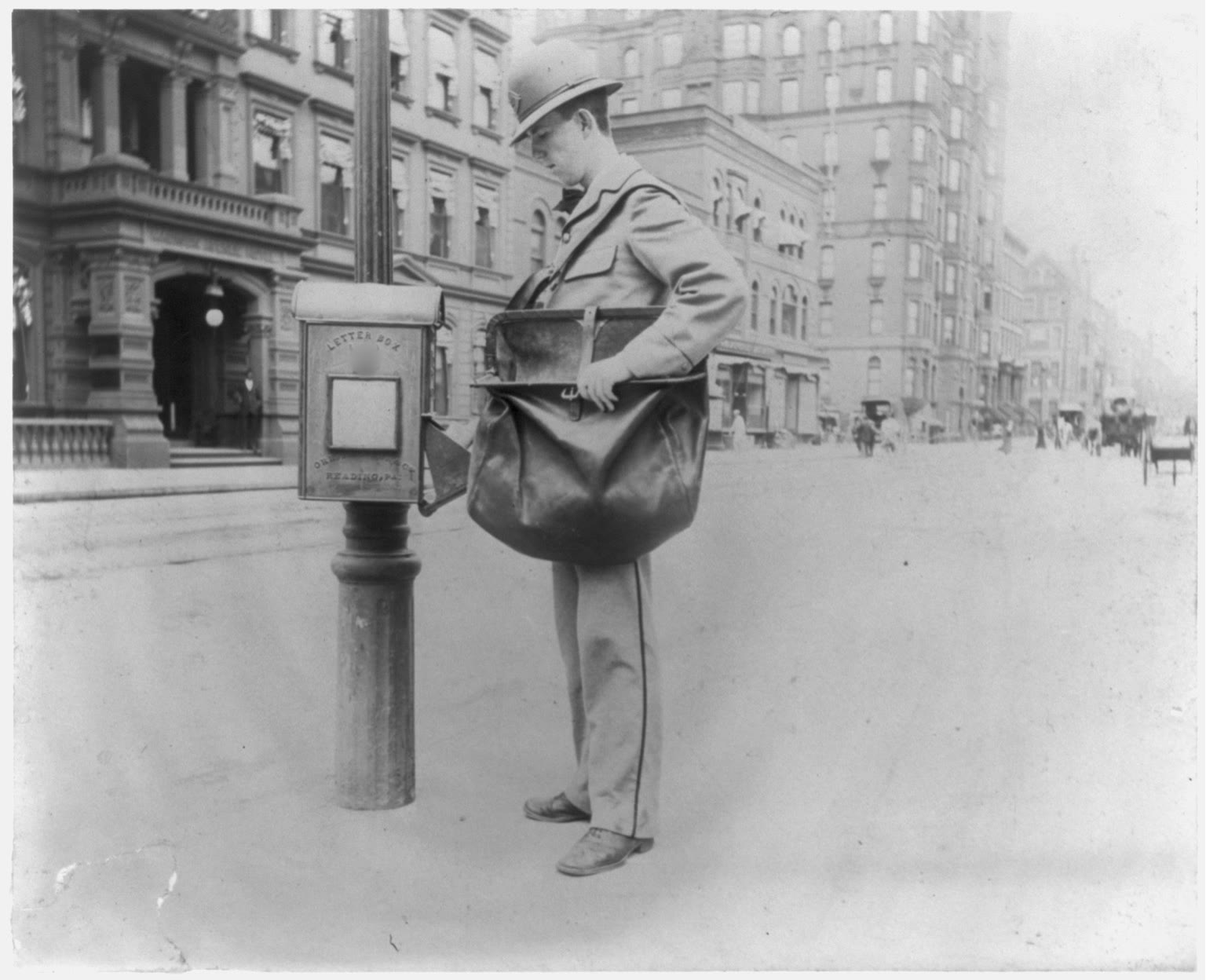

Shown: our claims department, collecting your health information.*
*Your doctor cannot afford the claims portal we would accept, so your claim goes by mail. Each leaked data point carries a $50,000 fine. That does not apply to the mail carrier.
Electronic submissions are held to a higher standard. Each must first prove it is not a magazine, or a bootlegger.
Our rule for claims is paper only, manual labor only. Where a portal exists, it first makes sure you are not a robot, one blurry crosswalk at a time. The rule has one exception: the house. Our side of every claim is read by machines, at the speed of machines.
For the protection of the people, a fine of up to $50,000 applies to each leaked data point of a person’s health information. We understand technology well enough to define a data point. No fine applies to paper.
Our claims department is backwards on purpose: your information comes in through the out door.
The real answer
Can a health plan be fined for leaking my health information?
Yes. As the statute is written, the civil penalty for violating the federal health privacy rules reaches $50,000 for each violation, up to $1,500,000 a year for violations of the same requirement (42 U.S.C. § 1320d-5(a)(3)(D)). And the health information the law protects is information “whether oral or recorded in any form or medium” (42 U.S.C. § 1320d(4)), so paper is covered as well as computers.
Our security, by actual computer science
We apply real computer science to every claim. We hold the private keys, all of them. That is what makes them private.
Your member ID rotates. A new plan, a new employer, a new year: a new number. You will find out which one at the pharmacy counter.
The procedure code never rotates. A code is a code. We never change a procedure; we add more codes.
The claim number is random, except when it isn’t. We choose it.
We could have swapped you for a number only we can read, and sent every claim anywhere, safely, prices included. The law already allows it. We did not.
The real answer
Can a health plan replace my identity with a code?
Yes. The federal privacy rule lets a covered entity, such as a health plan, assign a code to records it has de-identified so that only it can re-identify them, provided the code is “not derived from or related to information about the individual” and the plan does not use or disclose the code for any other purpose, or disclose “the mechanism for re-identification” (45 CFR 164.514(c)).
Your rights
You may ask what we know about you. The request must be made in writing, by the member, by mail. Our answer will arrive in about six weeks, by mail, with your information in it.
Plainly: this is a parody, and this page is not a real privacy notice. The site itself keeps no record of you. Its pages set no cookies, load nothing from anyone else, and, by the site’s own security policy, cannot send anything you type anywhere. Cloudflare and Amazon, which carry and host the site, see the ordinary details of each visit, as with any website, and your browser may send Cloudflare a report if a page fails to load. A purchase here is made on Stripe’s own page, under Stripe’s privacy policy.